 跳到内容
跳到内容 
Finding a reliable partner for your water sports business is a difficult task. The market is full of low-quality products that look good in photos but fail quickly on the water. We have spent over 15 years in the industry. We know that choosing the right inflatable paddle board manufacturer is the difference between a growing brand and a warehouse full of returns. Many buyers experience a “honeymoon phase” where the first order goes well. But then the second or third batch arrives with leaks, slow delivery, or poor printing. This “late-stage loss of control” is the biggest risk to your profit. We wrote this guide to help you look past marketing fluff. We want to show you the technical logic we use to build boards that last. Our goal is to help you reduce your business risk and find a supplier that values consistency as much as you do.
Key Takeaways:
- Verify Material Density: Quality manufacturers use high-density woven drop-stitch and heat-fused PVC layers to prevent the inflatable paddle board from bending or leaking over time.
- Assess Production Consistency: You must look for factories that perform 72-hour inflation tests on every unit to catch slow leaks that shorter tests miss.
- Evaluate Long-Term Risk: Professional partners provide clear documentation and warranty terms to protect your investment during seasonal peaks when quality usually drops.
What is an Inflatable Paddle Board Manufacturer?
A bad manufacturer will hide mistakes under layers of thick glue and bright ink. These mistakes lead to boards that burst when the sun gets hot. We help you identify a real factory that controls the whole process from start to finish.
An inflatable paddle board manufacturer is a facility that turns raw materials like PVC and drop-stitch fabric into finished goods. They handle everything from the initial design and material sourcing to the final airtight testing. A real manufacturer owns the machines and employs the workers who do the hand-gluing and heat-welding. You will find two main types of suppliers in this industry. First, there are trading companies. These are middlemen. They do not own a factory. They buy from someone else and sell to you. They often cannot tell you the technical details of the material because they do not see the production line. Second, there are true OEM and ODM factories. These are the partners we recommend. An OEM factory builds a product based on your exact drawings. An ODM factory has their own designs that you can put your logo on.
We believe a true manufacturer must have a deep understanding of physics. A paddle board is a high-pressure vessel. It is like a tire that must also be flat and stable. The factory must manage a complex supply chain. They need to buy high-quality “drop-stitch” material. This is the heart of the board. It consists of two layers of fabric joined by thousands of polyester threads. The factory also buys PVC resin and liquid glue. Their biggest job is quality control. They must make sure every single inch of the seam is perfect. If one worker has a bad day, a board might leak. That is why we focus on factories with strong management systems. We look for shops that have clear steps for every worker. This reduces the human error that ruins your profit margins.
| Supplier Type | What They Do | Risk Level |
| Trading Company | Buy and resell finished boards. | High – No control over quality. |
| Small Workshop | Use cheap glue and manual labor. | Medium – Quality is inconsistent. |
| Direct Factory | Own machines and raw material stock. | Low – Full control over batch quality. |
| Specialist Factory | Focus only on inflatable water sports. | Lowest – Expert technical knowledge. |
We often hear from buyers who lost money because they bought from a “cheap” factory. These factories often use “B-grade” materials. This means the PVC might have small holes or the threads inside are weak. A real manufacturer will show you their material warehouse. They will show you the brand names of the glue they use. They will explain why they chose a specific weight of PVC. If a supplier cannot explain their technical choices, they are a risk to your business. We suggest you always ask for a video call. Ask them to walk around the factory floor. If they refuse, they are likely just a small office hiding behind a website. We use this method to verify every partner we work with. We want to see the inflation room where boards sit for three days. If you do not see this, your boards will likely leak.

How Do You Assess Core Technology: Drop-Stitch and PVC Layers?
Cheap materials make a board feel like a soft mattress on the water. This instability ruins the user experience and leads to constant complaints from your customers. We use specific technical logic to ensure your boards are rigid, light, and durable. To evaluate an inflatable paddle board manufacturer, you must look at two things: the internal drop-stitch core and the external PVC layering method. High-quality production aligns with using high-density “woven” drop-stitch and “heat-fusion” PVC lamination. These choices ensure the inflatable paddle board stays flat and hard under 15 to 20 PSI of pressure.
The drop-stitch is the secret to the shape of the board. Inside the board, thousands of polyester threads connect the top and bottom layers. When you pump air into the board, these threads pull tight to keep it flat. But not all threads are the same. Cheap factories use “knitted” drop-stitch with a low thread count. This makes the board “bouncy” and easy to twist. We recommend seeking manufacturers who use “woven” drop-stitch. Woven material uses a cross-hatch pattern that is much stiffer. It also uses less material, so the board is lighter. Because the material is stiffer, you can use a thinner board without losing performance. This saves you money on shipping and storage space.
Next, you need to look at the PVC layers on the outside. This is where most “budget” brands cut corners to save money. There are three common ways to build the shell. First is the Single Layer. This is just one sheet of PVC. It is very light but very weak. It stretches easily, so the board will bend when a heavy adult stands on it. Second is the Double Layer Glued method. The factory takes a single-layer board and glues a second sheet of PVC over it. This makes the board very stiff, but glue is heavy. Hand-gluing also leads to human error, like air bubbles or uneven spots that might peel off later. Third is Fusion Technology. This is the best method for professional brands. The factory uses a machine to heat-bond the second layer of PVC directly onto the core fabric. No glue is used between the main layers.
| Technology Type | Weight | Stiffness | Durability | Best For |
| Single Layer | Ultra Light | Low | Low | Cheap retail/Kids |
| Double Layer (Glued) | Very Heavy | High | Medium | Rental/Budget durable |
| Fusion (Heat-Bonded) | Light | Very High | High | Professional brands |
| Woven Fusion | Lightest | Maximum | Maximum | High-end performance |
We also pay close attention to the “rails” or the side edges of the board. The rails are the most common place for a board to leak. A high-quality manufacturer will use a “double-rail” construction. They put one layer of tape to seal the top and bottom, and then a second wider layer over it for protection. Some advanced factories now use “heat-welded” rails. This means they melt the PVC layers together to create one solid piece. Because a weld is a mechanical bond, it can never come apart. Glue can fail if the board gets too hot in the sun, but welds stay strong. We always prefer welded rails for our B2B clients because it almost removes the risk of “seam bursts” in hot climates. If a manufacturer only uses glue on the rails, you should ask them why. Usually, it is because they do not want to buy the expensive welding machines.


What Should You Look for in Production Facilities and Quality Systems?
A clean office does not mean the factory produces quality goods. Inconsistent manufacturing leads to “batch failures” where half your shipment arrives with defects. We focus on the actual factory floor to ensure every board meets the same high standard. You must look for an inflatable paddle board manufacturer that invests in climate control and long-term testing areas. If the factory is dusty or disorganized, your boards will have debris trapped in the seams. This debris creates tiny air paths that lead to slow leaks after the board leaves the warehouse.
The first thing we check is the “Glue and Welding Room.” This area should be temperature-controlled. Glue and PVC behave differently in extreme heat or cold. A professional factory keeps the room at a steady temperature to ensure the bonds set correctly. We also look for specialized machinery. A high-end partner uses automatic cutting machines. These machines follow digital patterns to ensure every piece of PVC is cut perfectly. Manual cutting often leads to jagged edges, which make the seams weaker. You should also check for rail-welding machines. As we mentioned, welding is a big step up from gluing. If a factory has these machines, it shows they are serious about long-term durability and have the capital to invest in quality.
Testing protocols are the most important part of risk mitigation. Most factories tell you they test every board. But you need to ask how they test them. A standard “quick check” is not enough. We look for a 72-hour inflation test. The factory inflates the boards to 15 PSI and leaves them in a dedicated room for three full days. A worker checks the pressure with a gauge at the start and the end. This is the only way to catch “pinhole leaks” that take 24 hours to show up. We also check if they perform “stress tests” on samples. They should inflate a few boards from every batch to 25 or 30 PSI to ensure the seams do not pop under extreme pressure.
| Process Step | Why It Matters | What to Look For |
| Material Storage | Prevents PVC from aging or getting dirty. | Rolls kept off the floor in a dry room. |
| Auto-Cutting | Ensures precision and strong seam overlap. | CNC cutting tables and digital patterns. |
| Climate Control | Ensures glue bonds and welds stay consistent. | Air-conditioned or temperature-monitored rooms. |
| 72-Hour Test | Catches slow leaks before the board is packed. | Large racks with hundreds of inflated boards. |
| Final Cleaning | Prevents mold and glue stains on the board. | Dedicated cleaning stations before packing. |
Consistency is the result of a strong QC (Quality Control) system. You should ask to see their QC logs. A real manufacturer tracks every board with a serial number. They know which worker glued the rail and which worker performed the inflation test. If a customer reports a defect later, the factory can find the root cause. This accountability prevents the “quality drop” that often happens in the second or third order. We recommend choosing a factory that follows ISO 9001 standards. While this is not a perfect guarantee, it shows they have a written process for catching mistakes. Without a system, the factory is just a group of people making guesses. That is a risk we never take with our bulk orders.
How Do You Evaluate Customization and Design Capabilities?
A board that looks like every other product on the shelf will not help you grow your brand. You need a partner that can turn a vision into a physical product without compromising safety. We find that the best inflatable paddle board manufacturer provides both ODM and OEM services to meet different business needs. If you are just starting, you might use an ODM (Original Design Manufacturer) model where you pick an existing shape and add your colors. But if you want to win a specific market, you need OEM (Original Equipment Manufacturer) capabilities. This means the factory can build a unique “blueprint” just for you.
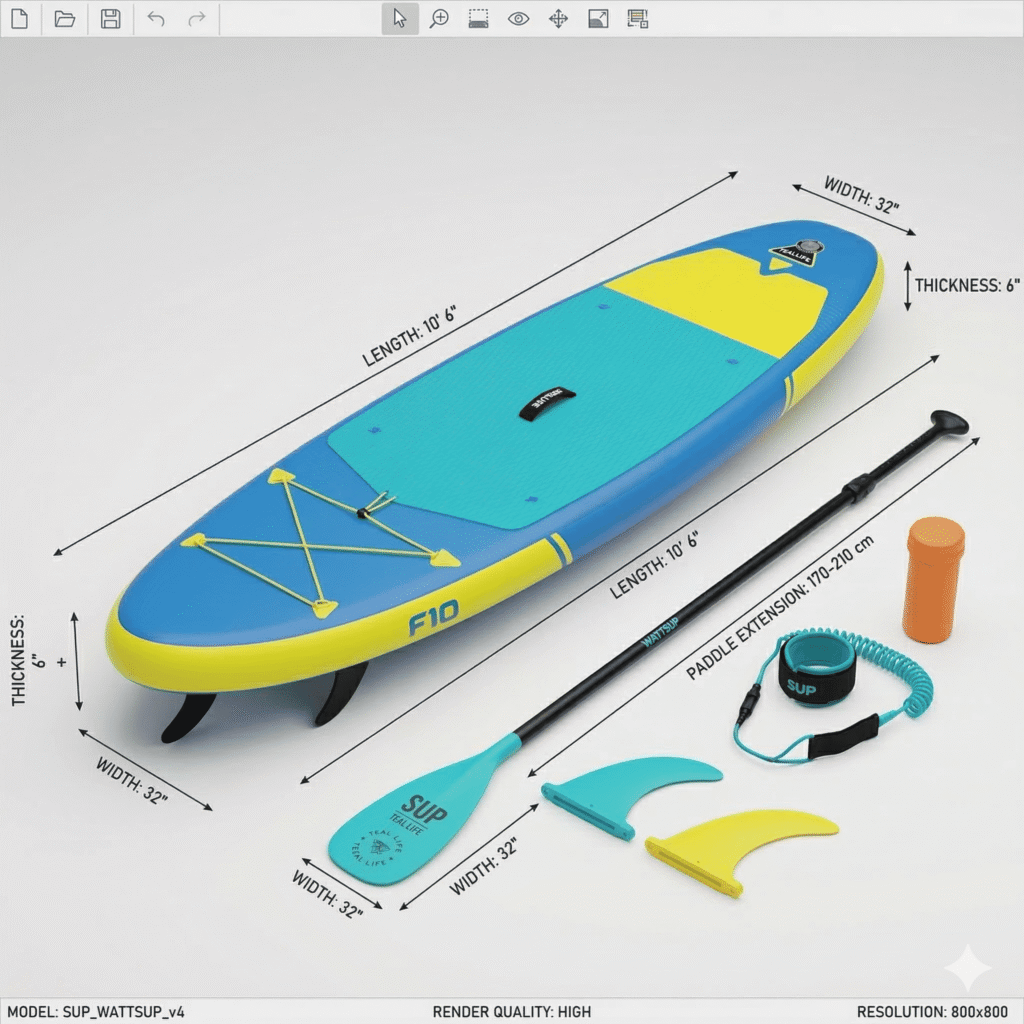
Design is not just about the graphics on the top. It starts with the “Rocker” and the “Outline.” The rocker is the curve of the board from nose to tail. A factory with an in-house engineering team uses CAD software to design these curves. They should explain why a “Touring” board needs a different nose shape than an “All-Around” board. If the factory tells you they use the same mold for every board, they are not a high-end partner. We suggest you ask for their “Design Portfolio.” Look at the boards they have built for other global brands. Check if they can handle complex features like kick-pads, camera mounts, or multi-fin configurations.
Printing is the next big hurdle in customization. Most budget factories use simple silk-screen printing. This is fine for one-color logos, but it cannot handle gradients or complex art. We look for manufacturers who offer advanced UV Digital Printing. This technology allows you to print high-resolution photos or intricate patterns directly onto the PVC. But you must ask a critical question: “How do you protect the print?” Without a UV-resistant top coat, the sun will bleach your beautiful design in just one month. A professional factory applies a clear protective layer over the digital print to keep the colors bright for years.
| Feature | Silk-Screen Printing | UV Digital Printing |
| Color Detail | Limited to solid colors. | Full photo-quality detail. |
| Setup Cost | High (per screen). | Low (digital file). |
| Durability | Very High. | High (with protective coat). |
| Best For | Simple logos and text. | Viral designs and complex art. |
The “Traction Pad” (EVA) is another area where you can spot quality. Cheap pads use a simple “diamond groove” that feels like hard plastic. We prefer factories that offer multi-layer EVA with heat-embossed textures. These pads provide better grip and feel premium to the touch. You should also check the alignment. If the pad is crooked or the glue is visible around the edges, it shows a lack of care. When we evaluate a factory, we look at these small details. If they cannot align a pad correctly, they probably did not align the internal threads correctly either. A manufacturer who cares about the small visual details usually cares about the big technical ones too.

What Are the Realities of Lead Times, Logistics, and Communication?
Missing your summer sales window because of a late shipment is a disaster for any B2B buyer. We know that a delay of two weeks at the factory can mean a loss of two months of retail revenue. When you vet an inflatable paddle board manufacturer, you must move past their promised dates and look at their actual production capacity. Most factories will tell you “30 days” because that is what you want to hear. But in reality, high-quality boards take time. If you order during the peak season between January and April, you are competing with every other brand in the world.
A professional manufacturer manages your expectations with a clear production schedule. We look for partners who break down the timeline: material procurement (15 days), assembly and welding (10 days), 72-hour testing (3 days), and final packing (2 days). If they cannot show you this breakdown, they are likely guessing. You should also ask about their “bottlenecks.” Do they have enough heat-welding machines for a big order? Do they have enough space in their inflation room? A common “industry trap” is a factory that takes too many orders and then rushes the glue drying time or skips the long-term inflation test to meet a deadline. This is how you end up with a batch of “leakers.”
Communication is your best tool for risk mitigation. In the B2B world, silence from a supplier is a huge red flag. We prefer manufacturers who assign a dedicated project manager to your account. This person should send you weekly updates with photos of your specific boards on the production line. You need to see the raw materials before they are cut and the boards while they are being tested. If the manufacturer “ghosts” you for a week, it usually means there is a problem they are trying to hide. We value transparency over perfection. We would rather have a partner tell us a machine broke and production is delayed by three days than a partner who lies and says everything is fine until the shipping date passes.
| Logistic Phase | Typical Timeframe | Key Risk |
| Pre-Production | 7 – 14 Days | Material shortages or color matching delays. |
| Mass Production | 20 – 40 Days | Rushed labor leading to messy glue/welds. |
| Quality Testing | 3 – 4 Days | “Skipping” the test to meet a shipping vessel. |
| Shipping/Freight | 25 – 45 Days (Sea) | Port congestion and customs paperwork errors. |
Logistics support is the final piece of the puzzle. A great manufacturer does more than just make the board. They help you get the product to your warehouse. You should check if they understand international shipping terms like FOB, CIF, or DDP. They should have experience with the “pack-out” logic. For example, can they fit 300 boards into a 20-foot container without damaging the boxes? Do they use double-walled cardboard for the outer cartons? We have seen many great boards ruined because the factory used thin boxes that collapsed during sea freight. Ask for photos of their previous export packaging. This shows if they care about the product after it leaves their gate. If they treat logistics as an afterthought, you will be the one paying for the damage.
How Should You Evaluate Warranty and After-Sales Support?
Buying a large batch of boards without a clear warranty is like gambling with your company’s cash flow. Even the best factory will have a small percentage of defects. We know that the real test of an inflatable paddle board manufacturer is not how they act when things go well, but how they act when a seam fails. A professional B2B partner provides a “safety net” that protects your reputation. You must look for a written warranty policy that covers at least 12 to 36 months for manufacturing defects.
The biggest risk is the “claim process.” Some factories promise long warranties but make the paperwork so difficult that you eventually give up. We look for a simple, documented system. If a customer returns a board with a leaky valve, what does the factory require? A high-quality partner usually asks for a photo of the serial number and a short video of the leak (the “bubble test”). Once verified, they should offer a clear solution. This might be a credit on your next order, a replacement board in the next shipment, or a cash refund for the unit. If a manufacturer tells you that you must ship the heavy, broken board back to China for “inspection,” they are trying to avoid paying. The shipping cost alone makes that impossible.
You also need to look at “Maintenance Support.” A good manufacturer helps you solve problems locally to save time and money. Do they provide a comprehensive repair kit with every board? This should include PVC patches, a valve wrench, and high-grade adhesive. We also value partners who provide technical training. This could be a library of high-resolution repair videos that you can send to your customers. If your staff can fix a small leak in ten minutes, you save a hundred dollars in shipping and keep a customer happy.
| Support Type | What is Included | Why It Saves You Money |
| Product Warranty | 1-3 years on seams and materials. | Protects against total batch failure. |
| Spare Parts | Extra valves, fins, and glue. | Fixes small issues without replacements. |
| Video Tutorials | Step-by-step repair guides. | Reduces your customer service workload. |
| Credit Policy | Deductions for verified defects. | Keeps your cash flow moving. |
Finally, ask about their “After-Sales Communication.” Does the factory have a team that speaks your language and works in a similar time zone? Or do you have to wait 24 hours for every email reply? In a B2B relationship, speed is vital. If you have a customer with a dangerous board defect, you need an answer immediately. We recommend choosing a manufacturer that uses instant messaging apps for daily support. A partner who stays in touch after the final invoice is paid is a partner you can trust for a decade.
What Are the Critical Red Flags to Watch Out For?
One bad decision in supplier selection can lead to a warehouse full of unsellable inventory. We have seen many brands collapse because they ignored the warning signs during the initial vetting phase. As a procurement manager, your goal is to spot these “red flags” before you send a deposit. An inflatable paddle board manufacturer that prioritizes short-term profit over long-term partnership will always show cracks in their process. We use our 15 years of experience to identify these risks so you do not have to learn the hard way.
The first major red flag is a price that is significantly lower than the market average. Raw materials like high-density drop-stitch and German-made adhesives have a fixed global cost. If a factory offers you a quote that is 30% lower than everyone else, they are cutting corners. Usually, this means they are using “B-grade” PVC with thin walls or low-count threads that will cause the board to warp. We follow the logic that a board which lasts five years is much cheaper than a board which fails in five months. A “cheap” board carries hidden costs like shipping returns, legal liabilities, and a ruined brand reputation.
Another red flag is a lack of focus in their production line. We prefer to work with specialists. If you visit a factory and see them making inflatable tents, yoga mats, and life jackets all on the same floor, be careful. Paddle boards are high-pressure vessels that require specific skills and testing equipment. A “jack of all trades” factory often lacks the dedicated 72-hour inflation room or the specialized heat-welding machines needed for iSUPs. You should also watch out for a “lack of transparency.” If a supplier refuses to show you their raw material certificates or will not let you see their QC logs, they are hiding something. A proud manufacturer wants to show you how they ensure quality.
| Red Flag | What It Usually Means | Business Impact |
| Suspiciously Low Price | Use of recycled materials or low-grade glue. | High return rates and safety risks. |
| No Specialized Focus | Lack of expertise in high-pressure tech. | Poor board stiffness and “banana” shape. |
| Slow Communication | Understaffed or hiding production issues. | Missed deadlines and “ghosting” on claims. |
| Hidden Production | They are likely a middleman, not a factory. | No direct control over batch consistency. |
Finally, look at their sample vs. mass production behavior. If the sample you receive is perfect, but they cannot explain the specific steps they take to replicate that quality for 500 units, you are at risk. Many small workshops can make one “hero sample” by hand, but they fail when the machines start running at scale. We suggest asking: “What is your internal rejection rate for this model?” A honest manufacturer will give you a real number, usually between 1% and 2%. If they say “zero percent,” they are lying. Every factory makes mistakes; a good one catches those mistakes before they reach your customers.
Conclusion: Taking the Plunge with Confidence
Choosing an inflatable paddle board manufacturer is not about finding the cheapest price; it is about finding the lowest risk. We have shown you that the heart of the board lies in the woven drop-stitch and the strength of the heat-welded seams. By looking for a partner who values 72-hour testing and transparent communication, you protect your brand’s future.
We follow these rigorous standards because we want to see your business grow. When your customers are out on the water, they should feel the rigidity and quality that only comes from expert manufacturing. Now that you understand the technical logic and the “industry traps,” you can make a decision based on facts rather than marketing fluff. Start your vetting process today. Ask your potential supplier for a technical data sheet or a video tour of their inflation room. A reliable partner will be happy to show you their work. If you have specific questions about high-density materials or custom designs, we are here to help you navigate the process.
FAQ
1. How do you manage lead time fluctuations during the peak sailing season?
We view production scheduling as a shared strategic task. The biggest risk for procurement managers is the “Peak Season Bottleneck” between January and May. We mitigate this by using a rolling forecast system with our long-term partners. We secure raw material slots in advance based on your projected volumes to ensure your production line is prioritized. Industry Tip: Avoid manufacturers who promise a flat “30-day lead time” year-round. A professional partner should ask for your shipping schedule 3-4 months in advance to balance factory capacity against international freight windows.
2. What specific protocols ensure batch-to-batch consistency for high-volume orders?
Consistency is managed through standardized SOPs (Standard Operating Procedures) rather than just manual checks. We use automated CNC cutting and precision heat-welding machines that follow the same digital blueprint for every unit. We also perform a staged QC process: material inspection, mid-production seam checks, and a final 72-hour inflation test. Industry Tip: Ask your supplier about their “Worker Retention Rate.” In the paddle board industry, the skill of the hand-finishing team is vital. High staff turnover is a common cause of quality drops between the first and third order.
3. How do you handle potential factory defects discovered after the goods arrive?
We operate with a “Long-term Partnership” mindset. While we aim for perfection through our 72-hour inflation tests, we recognize the realities of global logistics. We provide a standardized “After-Sales Documentation Kit” including spare valves and repair materials with every shipment. For any verified structural issues, we work closely with you to provide technical solutions or adjustments in future batches to minimize your operational loss. Industry Tip: Look for a manufacturer that provides detailed “Maintenance and Repair” video libraries. Empowering your local team to handle minor valve adjustments can save thousands of dollars in unnecessary return shipping costs.
4. Can you handle complex customization without compromising the board’s structural integrity?
We prioritize “Functional Design.” Some buyers want excessive features that can weaken the board’s high-pressure zones. Our engineering team reviews every custom blueprint to ensure that accessories like D-rings, mounts, and multi-color PVC overlays do not interfere with the heat-welded seams. We will advise you if a design choice increases the risk of air leaks or delamination. Industry Tip: Be wary of factories that say “Yes” to every design request without asking technical questions. A true expert manufacturer will challenge a design if it risks the safety of the end-user.
