 跳到内容
跳到内容 
Choosing an inflatable kayak supplier is not simply a matter of comparing unit prices. For a retailer, distributor, rental operator, or private label brand, the supplier must be able to reproduce an approved design, control air-holding components, document inspections, manage changes, and deliver consistent batches.
The most reliable evaluation process has three stages: define the product you need, verify the supplier before sampling, and use the approved sample and written specifications to control mass production. This guide explains what to request at each stage and how to identify gaps before they become quality claims, delays, or unexpected costs.
If you are still deciding which construction and models belong in your range, review ALS Leisure’s inflatable kayak product range guide before evaluating quotations.
1. Define Your Inflatable Kayak Sourcing Requirements
A supplier cannot provide a meaningful proposal until the intended product and market are clear. A request such as “send your best two-person kayak price” leaves too many variables undefined and often produces quotations that cannot be compared.
Start with a short sourcing brief that covers:
- Target country or region
- Retail, rental, resort, touring, recreational, or other intended use
- Single, tandem, or multi-person configuration
- Reinforced PVC tube construction, drop-stitch floor, or full drop-stitch construction
- Target dimensions, load rating, packed size, and product weight
- Required seat, footrest, fin, paddle, pump, bag, and repair-kit configuration
- Logo, graphics, color, packaging, manual, and labeling requirements
- Estimated sample quantity, first order quantity, and annual volume
- Target launch date and required delivery destination
- Testing, documentation, and market-access requirements
Buyers who already have a structured project can use the inflatable kayak RFQ guide to prepare the information suppliers need for a comparable quotation.
Match the construction to the market
Different kayak constructions serve different price points and use cases. A reinforced PVC kayak with a drop-stitch floor can provide a practical balance of portability, stability, and cost for recreational or rental programs. A full drop-stitch kayak usually targets buyers who prioritize a more rigid hull and higher-performance positioning.
Construction alone does not determine quality. Panel design, seam method, valve selection, reinforcement, pressure specification, accessories, and process control all affect the finished product. Ask the supplier to explain why a proposed construction matches your use case instead of accepting “premium” or “professional” as a specification.
ALS Leisure displays both reinforced PVC and full drop-stitch options in its inflatable kayak range, including its super-rigid inflatable kayak series.
2. Verify Whether the Supplier Can Manufacture Your Product
The word “supplier” can describe a manufacturer, trading company, sourcing agent, or a business that outsources part of production. None of these models is automatically unsuitable, but the buyer should know who controls the critical processes and who is responsible when specifications are not met.
Request the following before paying for a sample:
- The legal company name and business registration details.
- The manufacturing address and the address shown on commercial documents.
- A current video walkthrough of material storage, cutting, printing, assembly, welding or bonding, inflation testing, packing, and finished-goods storage.
- A list of processes completed in-house and processes handled by subcontractors.
- The name of the person responsible for engineering, quality, and order execution.
- A sample production schedule showing the main process steps.
A video call is more useful when the buyer controls the route. Ask the supplier to move from incoming materials to production and inspection without relying only on a prepared showroom presentation. Product labels, batch identification, equipment settings, calibration status, work instructions, and segregated nonconforming goods are more meaningful than general factory footage.
For a broader review of production and management controls, use this inflatable product factory audit checklist.
3. Evaluate Materials and Construction
Material descriptions should be measurable. Terms such as “heavy-duty PVC,” “premium drop-stitch,” or “military grade” are not sufficient for sample approval or mass-production control.
Ask the supplier to identify the specification that will be fixed for production, which may include:
- Base fabric type and construction
- Coating or lamination structure
- Finished material thickness or weight, where relevant
- Drop-stitch core construction and intended working pressure
- Reinforcement material and location
- Seam construction and process
- Valve model and supplier
- EVA, seat, footrest, fin, handle, D-ring, drain, and accessory specifications
- Color standard and printing method
- Material lot traceability
The correct values depend on the kayak design, rated pressure, load, intended environment, target price, and applicable requirements. Rather than copying a competitor’s numbers, ask the supplier to explain the relationship between the proposed material, construction, test plan, and intended use.
Confirm what will be identical in mass production
The sample quotation should state whether it uses production-intent materials and processes. If temporary materials, hand-made components, substitute accessories, or different printing methods are used, each deviation should be recorded. Otherwise, the buyer may approve a sample that cannot be reproduced at the quoted production price.
The final approved sample should become the golden sample. Store an identical signed reference with the supplier and attach a controlled specification to the purchase order.
4. Review the Supplier’s Quality Control Process
A quality statement is useful only when it explains what is checked, when it is checked, how acceptance is decided, and what happens after a failure.
Request a process-specific inspection plan covering:
Incoming materials
- Supplier and material identification
- Lot or batch traceability
- Visual and dimensional checks
- Storage requirements
- Handling of rejected material
In-process control
- Cutting and printed-part verification
- Seam, welding, or bonding process controls
- Positioning of valves, handles, D-rings, drains, fins, seats, and footrests
- Chamber and component checks before final assembly
- First-piece approval after a process or specification change
Finished-product inspection
- Dimensional and appearance inspection
- Inflation and air-retention test conditions
- Valve and chamber checks
- Accessory completeness and fit
- Label, manual, barcode, carton, and packaging inspection
- Batch identification and inspection records
Do not insert a generic pressure, test duration, or acceptance limit into the purchase order without confirming that it is appropriate for the approved design. The specification should state the test pressure, stabilization period, hold time, measurement method, environmental conditions, allowable change, sample size, and response to failure.
Ask how failures are controlled
The supplier should be able to explain:
- How a failed unit is identified and separated
- Whether repaired units are retested
- How recurring defects are investigated
- Who approves rework or use-as-is decisions
- How the buyer is notified of a material or process change
- How corrective actions are recorded and verified
This information is often more revealing than a claimed defect rate. A supplier that records and analyzes failures is easier to manage than one that claims defects never occur.
5. Confirm Safety, Standards, and Market Requirements
Compliance depends on the kayak configuration, propulsion, size, intended use, and destination market. Do not assume that one certificate covers every model, brand, or country.
The ISO 6185 series addresses minimum safety characteristics for certain inflatable boats, including aspects of design, materials, manufacture, and testing. The applicable part must be selected according to the craft. For example, the official ISO catalogue describes ISO 6185-1 as applying to inflatable boats with a maximum motor power rating of 4.5 kW. Regional adoptions and referenced editions may use different designations, so buyers should confirm the version recognized in the target market with a qualified laboratory or compliance professional.
Before ordering, ask:
- Which standard or regulatory requirement applies to this exact kayak model?
- Is an existing report valid for the buyer’s model, construction, branding, and market?
- Which samples and documents will a laboratory require?
- Who pays for testing, retesting, and certification?
- What product markings, capacity information, warnings, and instructions are required?
- How will a material, valve, construction, or model change affect existing reports?
Ask for reports from identifiable laboratories and verify the product description, model, applicant, dates, methods, and results. A certificate logo or a statement such as “complies with international standards” is not enough.
6. Order and Evaluate a Production-Intent Sample
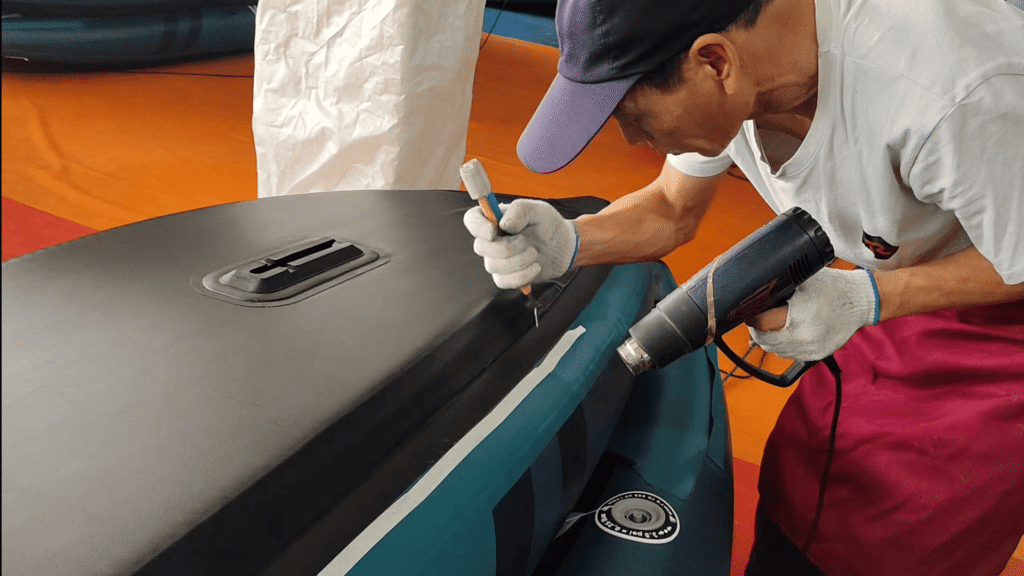
The sample stage should test both the product and the supplier’s working process. Before sample production begins, confirm:
- Controlled drawing or specification version
- Dimensions and tolerances
- Materials and construction
- Graphics, color references, and logo placement
- Components and accessory list
- Label, manual, barcode, and packaging requirements
- Test plan and acceptance criteria
- Sample price, revision policy, and shipping terms
- Target completion date
When the sample arrives, evaluate it against the written specification rather than memory or photographs. Record dimensions, weight, component placement, appearance, inflation behavior, accessory fit, packing method, and any functional tests relevant to the intended use.
Photograph the review and issue a written result: approved, approved with documented corrections, or rejected for revision. The article What Should Buyers Include in an Inflatable Kayak RFQ? can also be used to align the quotation, sample, and production requirements.
7. Compare Quotations Beyond Unit Price
Two inflatable kayak quotations are comparable only when their scope is the same. Create a comparison sheet that separates:
| Cost or term | What to confirm |
|---|---|
| Product price | Exact construction, dimensions, components, accessories, and packaging |
| Development cost | Design, engineering, artwork, mold, tooling, or setup charges |
| Sample cost | Number of samples, revisions included, and shipping |
| Testing cost | Laboratory, sample, documentation, and retest responsibility |
| MOQ | Per model, size, color, print, packaging version, and shipment |
| Lead time | Sample approval, material preparation, production, inspection, and dispatch |
| Inspection | Supplier inspection, buyer inspection, or third-party inspection |
| Incoterm | Included transport, export, insurance, and destination responsibilities |
| Payment terms | Deposit, balance trigger, inspection condition, and remedies |
| After-sales | Spare parts, claim evidence, response process, and corrective action |
A lower unit price can be offset by separate packaging, testing, tooling, inspection, freight, or revision charges. Require suppliers to list exclusions and quotation validity instead of leaving them implicit.
8. Assess OEM, ODM, and Private Label Capability
Private label, OEM, and ODM projects require different levels of supplier involvement.
- Private label: The buyer selects an existing platform and customizes branding, graphics, packaging, or accessory combinations.
- OEM: The buyer provides defined requirements and the factory manufactures to the agreed specification.
- ODM: The supplier contributes more product-development input, such as structure, feature selection, engineering, or an adaptable design platform.
Confirm who owns drawings, graphics, molds, packaging files, test reports, and approved samples. Also define whether the supplier may display the product, sell the same design to other buyers, or substitute a component without written approval.
ALS Leisure outlines its customization, development, quality, and logistics support on its OEM and ODM services page. Buyers should still document the exact scope and deliverables for each project in the quotation and purchase agreement.
9. Use an Inflatable Kayak Supplier Scorecard
Use the same criteria for every candidate so that presentation quality does not outweigh manufacturing evidence.
| Evaluation area | Evidence to request | Warning signs |
|---|---|---|
| Factory identity | Registration details, address, live production walkthrough | Unclear production location or only office/showroom footage |
| Product fit | Relevant kayak models, construction explanation, engineering contact | Generic inflatable experience without kayak-specific controls |
| Materials | Controlled specifications and traceability method | Marketing terms without measurable specifications |
| Production | Process map, equipment, work instructions, subcontracting disclosure | Critical processes cannot be explained or shown |
| Quality control | Inspection plan, test records, nonconformance process | “100% quality” claims without acceptance criteria or records |
| Sample control | Written specification, deviation list, golden-sample process | Sample made before requirements are confirmed |
| Compliance | Applicable-standard assessment and identifiable reports | One certificate claimed to cover all products and markets |
| Commercial terms | Itemized quotation, MOQ, lead time, Incoterm, payment terms | Important conditions confirmed only in chat messages |
| Change control | Written approval process for material or component changes | Supplier may substitute without buyer approval |
| After-sales | Claim procedure, evidence requirements, response and corrective action | No documented process after shipment |
Weight the scorecard according to your risk. A rental operator may give more weight to serviceability, field durability, spare parts, and repeat-order consistency. A private label retailer may place additional weight on packaging, visual consistency, labeling, documentation, and launch timing.
10. Questions to Ask Before Placing an Order
Before paying a deposit, ask the shortlisted supplier these questions:
- Which parts of this kayak are manufactured in-house?
- Which materials, valves, and accessories will be fixed in the specification?
- What will be different between the sample and mass production?
- How are material and finished-product batches identified?
- What inflation and air-retention test will be used for this model?
- What happens when a unit fails inspection?
- Which requirements apply in our destination market, and who verifies them?
- What is the MOQ for each model, color, graphic, and packaging version?
- What can change the quoted price or lead time?
- Can we approve a golden sample before mass production?
- How are engineering and material changes communicated?
- What inspection rights do we have before shipment?
- What evidence is required for a quality claim?
- Who owns the design, artwork, tooling, and test documents?
- Who is responsible for corrective action after a recurring defect?
Frequently Asked Questions
What is the difference between an inflatable kayak supplier and manufacturer?
A manufacturer performs and controls relevant production processes. A supplier may be a manufacturer, trader, agent, or another commercial intermediary. Buyers should verify who owns the factory, which processes are performed there, which are subcontracted, and who holds contractual responsibility for quality and delivery.
What documents should I request from an inflatable kayak supplier?
Request company registration details, product specifications, controlled drawings, material information, an inspection and test plan, sample records, applicable test reports, packaging specifications, an itemized quotation, and written commercial terms. The exact list depends on the product and destination market.
Should I choose the supplier with the lowest MOQ?
Not automatically. A low MOQ can be helpful for market testing, but buyers should also compare sample accuracy, material control, unit economics, packaging constraints, test costs, lead time, and repeat-order consistency. Confirm whether the MOQ applies per model, color, graphic, packaging version, or total order.
How should I evaluate an inflatable kayak sample?
Evaluate the sample against an approved specification. Check construction, dimensions, weight, appearance, component location, valve and accessory fit, labeling, packaging, and the agreed inflation and functional tests. Record deviations in writing and establish a golden sample before production.
Does an ISO 6185 report cover every inflatable kayak?
No assumption should be made without reviewing the report and product scope. Applicability depends on the craft and the recognized requirements in the destination market. Confirm the relevant part and edition, model coverage, applicant, construction, test methods, and branding implications with the laboratory or a qualified compliance professional.
Can an inflatable kayak supplier develop a private label range?
Many suppliers offer private label support using existing product platforms, while OEM or ODM projects may involve greater specification or development work. Confirm the available models, customization limits, MOQ, ownership, testing impact, sample process, and packaging scope before committing.
Build the Supplier Decision Around Evidence
The best inflatable kayak supplier is not necessarily the one with the largest catalogue or the lowest quotation. It is the supplier that can explain the product, document the agreed specification, demonstrate process control, communicate changes, and respond predictably when a problem occurs.
Start with a clear sourcing brief, verify the production and quality system, approve a production-intent sample, and attach the controlled requirements to the order. This approach gives buyers a stronger basis for comparing suppliers and gives the selected factory a clearer basis for delivering consistent production.
Planning an OEM, ODM, or private label inflatable kayak project? Send ALS Leisure your target market, intended use, preferred construction, model mix, estimated quantity, customization requirements, and launch schedule through the OEM/ODM consultation page. The team can review the brief and recommend the next step for quotation and sampling.
