 跳到内容
跳到内容 
Knowing how to choose an inflatable floating dock manufacturer requires more than comparing a product photo, nominal size, and unit price. A suitable manufacturer must understand the dock’s intended use, convert the project brief into controlled drawings and specifications, verify materials and production processes, manage interfaces and accessories, document inspections, and reproduce the approved sample in bulk production.
This guide is for resort purchasing teams, marina and yacht-service operators, water-sports businesses, distributors, rental companies, and private-label brands. It explains how to shortlist suppliers, what evidence to request, how to structure sampling, and which decisions must remain with qualified project, engineering, safety, compliance, or site professionals.
1. Define the Dock Project Before Comparing Manufacturers
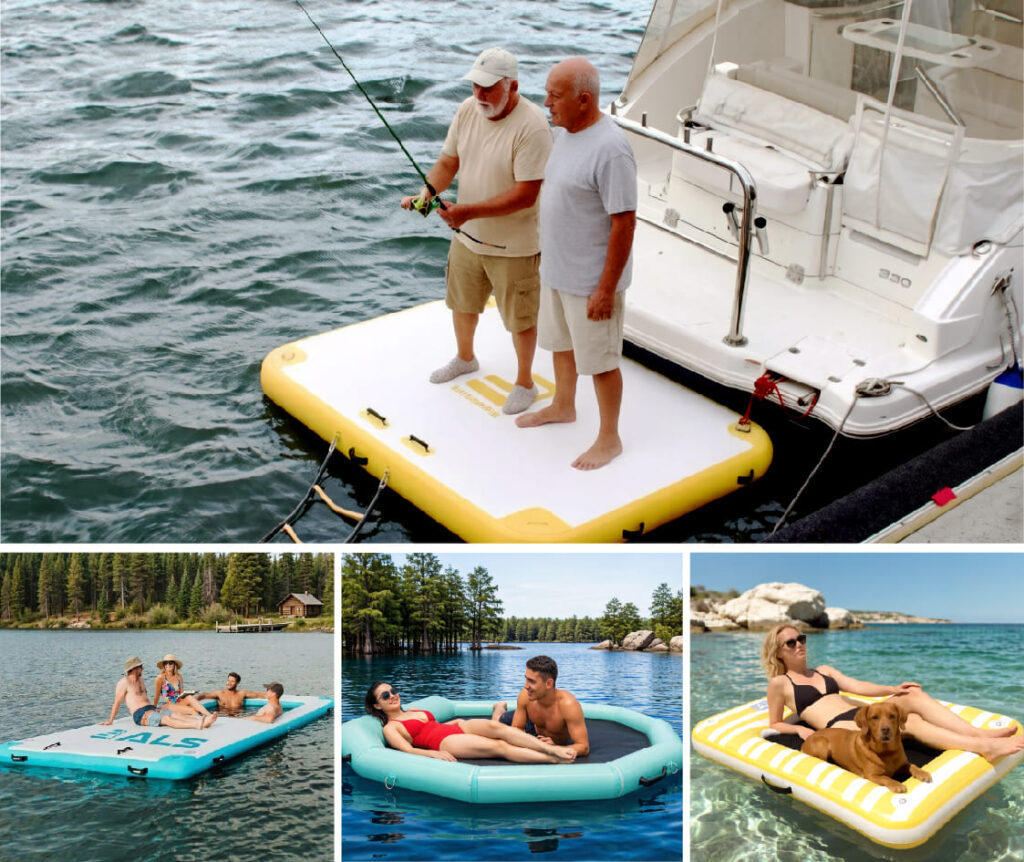
A manufacturer cannot prepare a meaningful proposal from “we need an inflatable dock.” Begin with the operating role. A resort swim platform, yacht-side access platform, modular event deck, kayak launch point, and retail leisure dock can require different geometry, surfaces, fittings, accessories, packing, and technical review.
- Application: access, staging, relaxation, activity, rental, events, retail, or connection to other equipment
- Users and operation: guest profile, staff roles, supervision, setup cycle, and storage routine
- Environment: pool, lake, sheltered coastal area, vessel-side use, temperature range, exposure, and seasonal storage
- Configuration: single platform, connected modules, adjoining products, ladder, steps, bumpers, or accessories
- Commercial plan: sample quantity, bulk volume, mix of sizes, branding, destination, launch date, and replenishment
- Open decisions: load basis, anchoring or mooring, access, occupancy, weather, permits, and market requirements requiring qualified review
Use ALS Leisure’s custom inflatable floating dock brief to organize project inputs before requesting quotations. Keeping one controlled brief prevents different suppliers from pricing different assumptions.
2. Decide Whether You Need an Existing Model or a Custom Project
An existing model can reduce development work when its dimensions, deck, fittings, packaging, and intended use already match the project. However, adding a logo does not solve an unsuitable configuration. A custom or modified project may be justified when the dock must fit a vessel, pool edge, shoreline, storage area, transport route, modular layout, or operating procedure.
| Development path | Best fit | Main control |
|---|---|---|
| Existing model | Standard application with suitable dimensions and features | Confirm the quoted product matches the current specification |
| Existing model with branding | Private-label or resort identity without structural change | Control artwork, colors, labels, packaging, and warning areas |
| Modified model | Changes to fittings, surface, accessories, or minor geometry | Identify affected drawings, tests, sample checks, and cost |
| Custom project | New layout, interfaces, access features, or operating role | Approve a complete technical brief, revision process, and validation plan |
A credible manufacturer should explain what is standard, what is being changed, and which checks must be repeated. Avoid proposals that present a custom-looking rendering without identifying the underlying construction, interface assumptions, or approval stages.
3. Verify That the Supplier Controls Relevant Manufacturing Processes
When learning how to choose an inflatable floating dock manufacturer, confirm who performs and controls the work. A supplier may manufacture the inflatable structure while subcontracting printing, deck pads, metal parts, bags, or packaging. Subcontracting is not automatically a problem, but responsibilities and controls must be visible.
- Which facility makes the inflatable body and where will the order be produced?
- Which materials, fittings, deck components, valves, and accessories are purchased or subcontracted?
- How are incoming materials identified and linked to the order?
- Which process parameters or workmanship criteria are controlled during joining, assembly, finishing, and packing?
- Who approves first production and handles deviations?
- How are subcontractors, replacement components, and material changes controlled?
- Which inspection and test records are retained for the order?
Use the inflatable product factory audit checklist to review process control, traceability, quality records, subcontracting, and change management. A polished showroom and a general company presentation do not replace current order-level evidence.
4. Request a Controlled Product Specification
Terms such as “commercial grade,” “heavy duty,” or “marine quality” are not complete specifications. Ask each manufacturer to describe the product in measurable, revision-controlled terms. The specification should cover the inflatable structure and every interface that affects the project.
- Overall dimensions, thickness, shape, working pressure, chambers, and valve arrangement
- Structural material or laminate, surface layers, colors, and approved references
- Deck material, texture, pattern, coverage, edge finish, and clear zones
- Handles, D-rings, straps, patches, bumpers, ladder or step fittings, and reinforcement details
- Module connection parts, spacing, orientation, mating products, and installation sequence
- Artwork, warnings, identification, traceability marks, instructions, and labels
- Pump, gauge, repair materials, bags, hardware, spare parts, and other accessories
- Finished product weight, packed dimensions, carton data, and packing sequence

Do not accept a pressure, load, anchoring, mooring, occupancy, or weather value copied from a different model or marketing page. Require the basis, configuration, method, responsible reviewer, and evidence applicable to the exact project. Product-side D-rings or fittings do not by themselves define a complete anchoring or mooring system.
5. Evaluate Engineering, Site, and Compliance Boundaries
A manufacturer can provide product drawings, material information, sample evidence, and production records. The buyer must still identify decisions that depend on the site, users, activity, adjacent structures, environmental forces, operational controls, or destination market. Assign these decisions to appropriately qualified people instead of treating a supplier quotation as universal approval.
Ask the manufacturer to state assumptions and exclusions. Review the applicability of any test report, certificate, instruction, warning, or declaration by product name, model, revision, configuration, intended use, and target market. A report for another size or product family may be useful background but is not automatically evidence for the proposed dock.
For quality-system context, the official ISO 9001:2015 overview describes quality-management requirements. However, certification of a management system does not approve a specific dock design, production lot, installation, anchoring system, or operating site.
6. Use Sampling to Verify the Proposal
The sample should be a controlled product-development stage, not a sales demonstration. Before ordering it, agree on the sample ID, drawing and specification revision, materials, surface, fittings, connections, artwork, accessories, packaging, review methods, acceptance criteria, and open items.
ALS Leisure’s commercial inflatable floating dock sample evaluation guide provides a detailed approval framework covering identity, dimensions, chambers, valves, visible structural areas, deck finish, fittings, modular connections, access, staff handling, packing, site-use review, and final disposition.
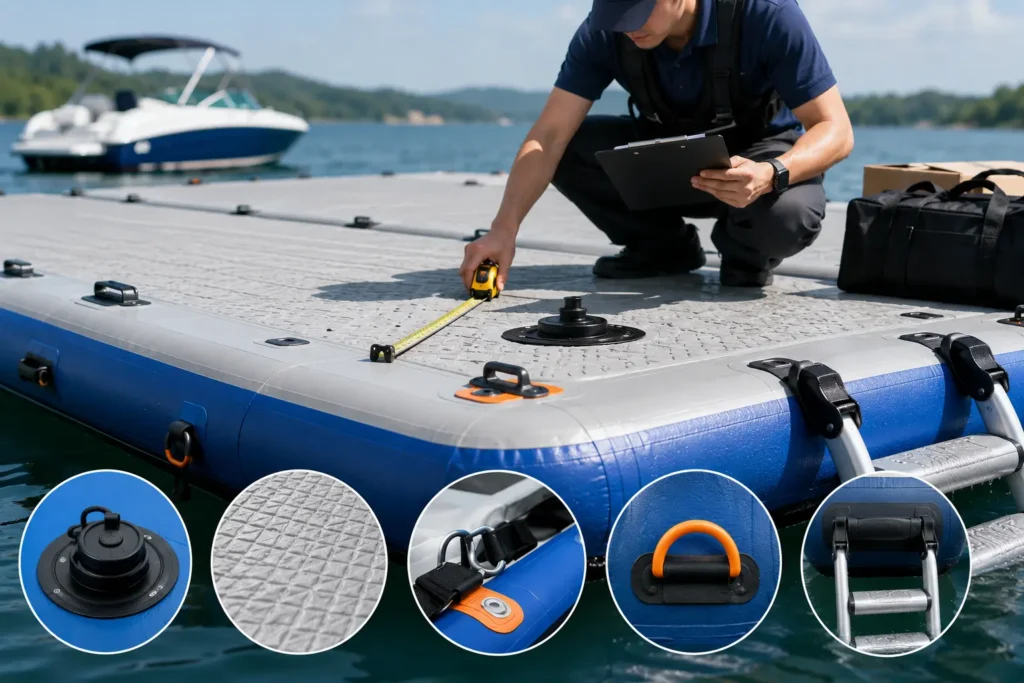
Record every deviation and decide whether it needs correction, documented acceptance, qualified review, or a revised sample. Store the approved physical sample and reference file under change control so the production team cannot replace components or construction details informally.
7. Compare Quality Plans, Not Only Finished Samples
A good sample can still be followed by inconsistent production if its accepted features are not translated into purchasing, production, and inspection documents. Request an order-specific quality plan showing when materials, dimensions, workmanship, chambers, valves, surfaces, fittings, artwork, accessories, packing, and required tests will be checked.
| Control point | Evidence to request |
|---|---|
| Incoming materials | Material identity, supplier or batch records, approved references, and substitution control |
| First production | First-piece or first-unit review against drawings and sample |
| In-process production | Process and workmanship checks at defined stages |
| Finished product | Dimensions, appearance, components, pressure-related checks under agreed methods, and inspection records |
| Artwork and labels | Approved files, color references, placement, warnings, and traceability |
| Pack-out | Accessory count, folding, protection, bag, carton, markings, weight, and dimensions |
| Change control | Approval route for material, component, process, artwork, or packaging changes |
ALS Leisure’s quality assurance service describes related manufacturing and inspection controls. Request records for the actual product revision and purchase order rather than relying on general claims.
8. Compare MOQ, Lead Time, Packaging, and Landed Cost
MOQ may vary by size, structure, material color, deck pattern, print version, packaging, and accessory set. Ask the manufacturer to separate standard components from custom minimums. For a modular project, confirm whether different modules can share materials and production runs or require separate minimum quantities.
Break lead time into design input, drawing, material preparation, sample production, buyer review, corrections, bulk production, inspection, packing, and shipping. Compare landed cost, including development fees, samples, artwork, pumps and gauges, repair kits, spare parts, bags, cartons, inspection, freight, duties, and replacement stock. A low unit price can be offset by inefficient packing, missing accessories, or unplanned rework.
9. Assess Communication and Change Management
Technical communication is part of supplier capability. The manufacturer should identify assumptions, answer questions against document revisions, record decisions, and distinguish product observations from qualified site conclusions. Check who owns sales communication, engineering or drawing changes, sample approval, production release, quality decisions, and claims.
Before paying a deposit, confirm which documents form the purchase agreement. At minimum, include the approved specification and drawings, sample reference, artwork, component and accessory list, inspection plan, test methods and acceptance criteria, packaging standard, delivery terms, change-control process, and claim procedure.
10. Score Shortlisted Inflatable Floating Dock Manufacturers
| Evaluation area | Questions for the shortlist |
|---|---|
| Application fit | Does the proposal address the defined users, environment, interfaces, and operating workflow? |
| Technical definition | Are dimensions, construction, surfaces, fittings, connections, accessories, and assumptions documented? |
| Manufacturing control | Can the supplier show where and how the relevant processes and subcontractors are controlled? |
| Sample process | Is the sample linked to revisions, methods, evidence, deviations, and approval decisions? |
| Quality evidence | Are order-specific material, process, inspection, packing, and change records available? |
| Commercial proposal | Are MOQ, fees, lead-time stages, packing data, landed-cost inputs, and exclusions clear? |
| Project boundaries | Does the supplier avoid unsupported site, load, anchoring, mooring, access, or compliance claims? |
| Communication | Are responsibilities, revisions, approvals, corrective actions, and claims managed in writing? |
Score every supplier against the same evidence request. A manufacturer that asks detailed questions, identifies missing decisions, and documents limitations may be a stronger project partner than one that immediately promises every requirement.
Frequently Asked Questions
What is the difference between a manufacturer and a trading company?
A manufacturer directly controls relevant production processes; a trading company coordinates supply from another facility. Either can participate in a project, but the buyer should know the actual production site, responsibilities, subcontractors, quality controls, and route for technical or corrective decisions.
What should buyers request before ordering a dock sample?
Request the project brief, current drawing and specification, materials and component schedule, deck and artwork references, accessories, packaging, sample price and lead time, review methods, acceptance criteria, and a list of substitutions or open technical decisions.
Can one approved sample cover multiple dock sizes?
Not automatically. Different dimensions, thicknesses, chambers, fittings, interfaces, or use cases can affect what needs review. The buyer and responsible technical reviewers should define which evidence is transferable and which size or configuration requires separate sampling or validation.
Should the lowest quotation win?
No. Compare the same scope and landed-cost assumptions. Include development, materials, accessories, inspection, packaging, freight, spare parts, replacement stock, and the cost of unclear specifications or uncontrolled changes.
Request an Inflatable Floating Dock Manufacturer Review
The practical answer to how to choose an inflatable floating dock manufacturer is to compare evidence against one controlled project brief. Review the ALS Water Float range, then contact ALS Leisure with the intended use, site environment, preferred dimensions, layout, interfaces, quantity, branding, destination, and required date. The team can prepare a product proposal, identify missing inputs, and define the next drawing and sample stage.
