 跳到内容
跳到内容 
Choosing a commercial water float supplier for a resort is not simply a matter of comparing colors and unit prices. The right partner must translate the resort’s guest profile, water environment, operating routine, branding requirements, and replacement plan into a controlled product specification. Buyers should define the intended use first, compare suitable float formats, test a representative sample, and verify how the supplier will control bulk production.
This guide is for resort purchasing teams, beach clubs, hospitality groups, rental operators, and distributors sourcing inflatable floats for managed guest use. It explains what to include in a request for quotation, what evidence to review, and how to build a practical fleet without treating every product marketed as “commercial grade” as equivalent.
1. Define the Resort Use Case Before Contacting a Commercial Water Float Supplier
Begin with the operating environment rather than a catalog. A quiet adult pool, a family resort lagoon, a beach club, and a supervised waterfront rental station create different requirements. Give suppliers a written brief that identifies the water type, expected users, supervision model, daily setup and storage routine, desired branding, target delivery date, and estimated quantity.
- Water environment: chlorinated pool, freshwater lake, sheltered sea area, or mixed use
- Guest group: adults, families, couples, or supervised activity participants
- Operating model: complimentary amenity, paid rental, guided activity, retail sale, or event use
- Handling cycle: inflation frequency, daily movement, drying, storage space, and transport distance
- Brand standard: colors, logo position, identification labels, and photography requirements
- Commercial constraints: launch date, budget range, order mix, replenishment plan, and destination
This information lets a supplier recommend a relevant construction and product mix. It also makes competing quotations easier to compare because each proposal is responding to the same operational brief.
2. Build the Fleet by Product Role
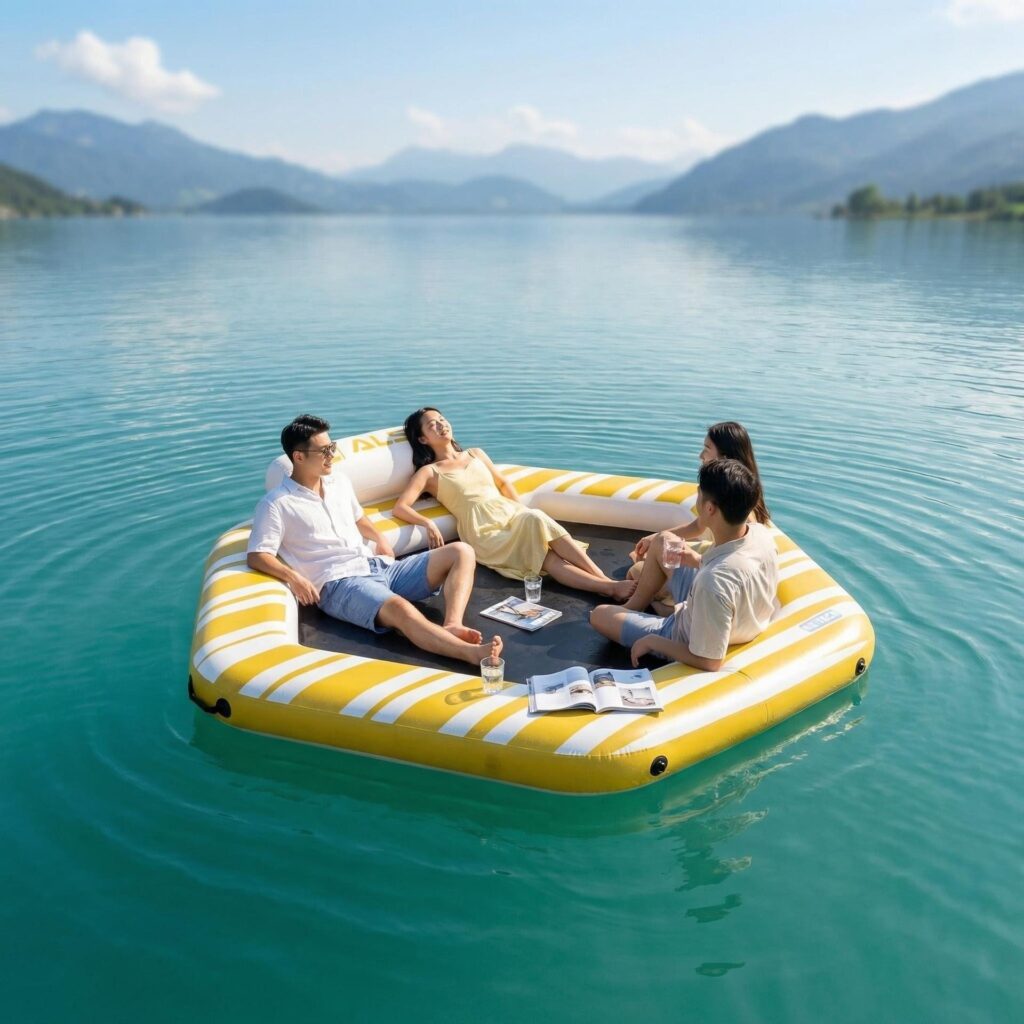
A resort fleet does not need every available shape. It needs a controlled set of formats that cover distinct guest experiences and can be handled by staff. ALS Leisure’s water float range illustrates several roles, including solo mesh floats, social lounges, multi-person adventure floats, and firmer floating platforms.
| Product role | Typical resort use | Main evaluation question |
|---|---|---|
| Solo mesh lounger | Relaxed individual use in a pool or sheltered water | Can guests enter, recline, and exit comfortably? |
| Backrest or social lounge | Couples, families, or small groups spending more time on the water | Is the seating layout stable for the intended number of users? |
| Multi-person activity float | Supervised group play or destination activity areas | Are handles, boarding points, and load assumptions clearly specified? |
| Rigid inflatable platform or dock | Access, staging, events, yoga, or connection to other equipment | Does the structure, pressure range, and connection system suit the project? |
For example, ALS Leisure lists its rectangular solo mesh float at 152 × 110 × 15 cm with a stated one-person capacity and 150 kg maximum load. That makes the page useful as a model-level reference, but a buyer should still validate the proposed product under the resort’s actual workflow before ordering a fleet.
3. Match Construction to the Water and Operating Environment
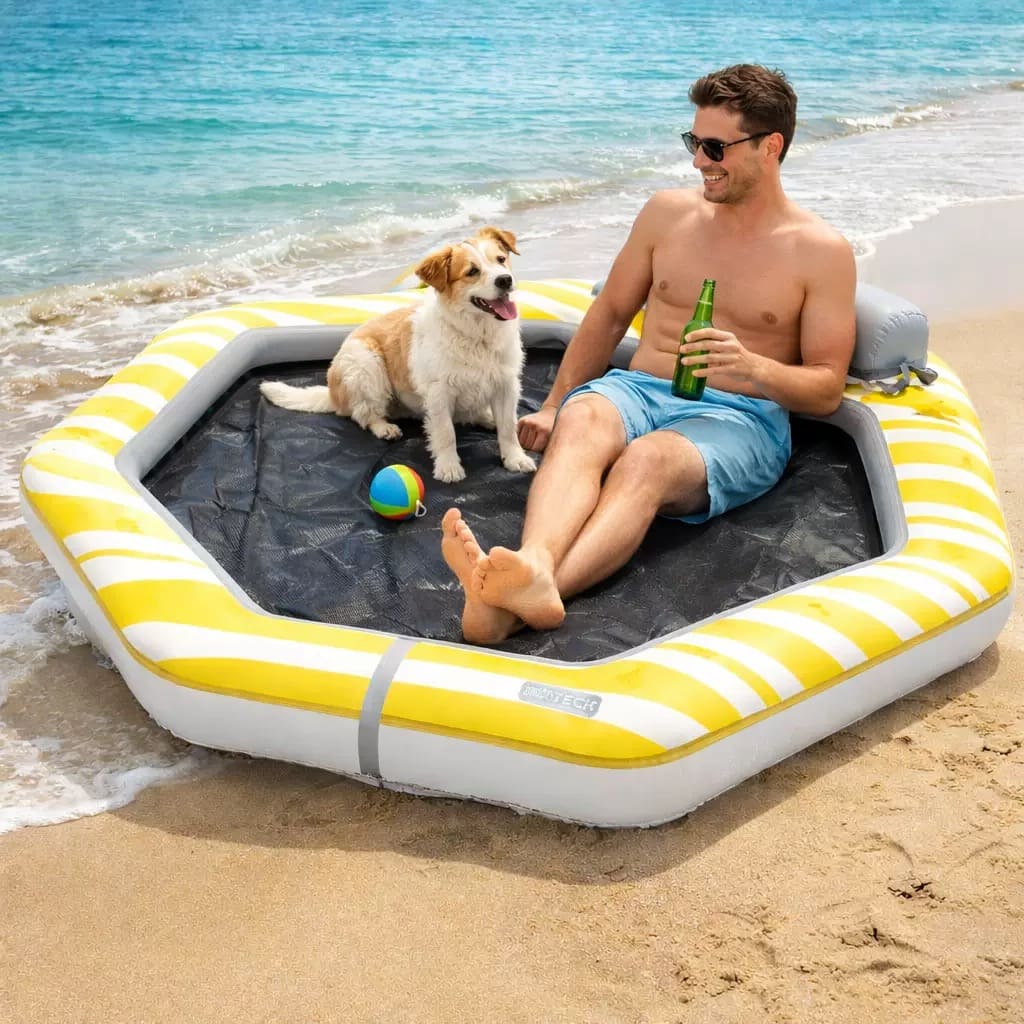
“Commercial” is not a universal material specification. Ask the supplier to explain why the proposed construction suits the stated environment. Pool chemicals, saltwater, ultraviolet exposure, hot deck surfaces, dragging, repeated inflation, and damp storage can affect products differently. The answer should be a documented product specification and care procedure—not a generic durability claim.
Discuss how staff will move each unit. A light mesh lounger may be easy to carry but needs defined lifting points and a drying routine. A larger lounge needs practical handles and enough space for draining, cleaning, and storage. A high-pressure platform has different pump, valve, gauge, and training requirements. Include the expected use conditions in the approved specification and operating guide.
4. Request a Verifiable Material and Construction Specification
A capable commercial water float supplier should be able to identify the controlled components of the product. Request measurable descriptions and approved references rather than accepting words such as “premium,” “heavy duty,” or “hotel quality” without definitions.
- Finished dimensions, working pressure, user capacity, and stated maximum load
- Shell material or laminate construction, coating, thickness, and color reference
- Seam or joining method and the production controls applied to it
- Chamber layout and any internal structural material
- Valve model, location, cap or seal arrangement, and compatible pump
- Mesh specification and attachment method where applicable
- Handles, D-rings, connection points, backrests, and other load-bearing details
- Printed warnings, product identification, traceability marks, and packaging labels
- Included accessories, repair materials, instructions, and spare-part options
The approved sample, specification sheet, artwork file, packaging standard, and inspection criteria should use matching revision numbers. This prevents an attractive showroom sample from becoming the only reference for production.
5. Confirm Applicable Safety and Consumer Information Requirements
Product classification depends on design, intended use, configuration, and sales market. The ISO 25649-1:2024 overview covers general safety requirements and test methods for classified floating leisure articles for use on and in water, while ISO 25649-2:2024 addresses consumer information. These standards also have defined scopes and exclusions.
Do not assume that every water float belongs to the same class or that a supplier’s general certificate covers a new design. Ask a qualified compliance specialist to determine which requirements apply in each target market. Require reports, markings, instructions, and product records that identify the tested model and revision. A logo or certificate number alone is not enough to establish applicability.
6. Test a Representative Sample Under Resort Workflow
A catalog can narrow the shortlist, but the sample should confirm whether the product works for guests and staff. Use the specified pump and gauge, document the starting condition, and follow a repeatable checklist. Agree with the supplier in advance on any technical test method, duration, acceptance limit, and conditioning required.
- Confirm dimensions, appearance, pressure instructions, labeling, and included accessories.
- Observe inflation time, valve access, pressure control, and ease of moving the product.
- Evaluate boarding, seating or reclining position, stability, handles, and exit for intended users.
- Inspect seams, attachments, mesh junctions, valves, and printed areas before and after evaluation.
- Check how easily the unit drains, dries, folds, packs, and fits the proposed storage area.
- Record pressure-retention or load-test results only against an agreed method and acceptance criterion.
- Photograph findings and issue a written sample approval or corrective-action list.
If the design changes after testing, identify the new revision and decide whether another sample is required. The approved sample should remain linked to the bulk order specification.

7. Plan Custom Branding Without Hiding Operational Information
Branded floats can support guest photography and make resort assets easier to identify, but artwork must work with the product structure. Ask the supplier to provide a print template that shows seams, valves, handles, mesh, warning areas, and safe artwork boundaries. Confirm color references, print method, logo dimensions, orientation in use, and approval procedure.
Keep safety information, inflation instructions, product IDs, and inspection labels readable. For a new brand program, ALS Leisure’s custom design and brand service can be used as an internal link from the sourcing brief, while the final artwork and construction still require formal approval.
8. Compare MOQ, Product Mix, Packaging, and Landed Cost
MOQ should be discussed by design, color, print version, and packaging—not only as one total number. A resort may prefer a mixed fleet, but different structures or artwork versions can have separate production constraints. Ask the commercial water float supplier to show which models can share materials, colors, accessories, or cartons and which require separate minimums.
Compare landed cost rather than unit price alone. Include sample and artwork fees, pumps, gauges, repair materials, spare parts, individual bags, master cartons, labeling, inspection, freight, duties, storage volume, and replacement units. Request packed dimensions, gross and net weight, quantity per carton, carton markings, and loading data before confirming logistics.
9. Verify the Supplier’s Production and Quality Evidence
Supplier evaluation should connect the approved design to production records. Review how incoming materials are identified, how critical processes are controlled, who approves first production, how inspections are recorded, and how nonconforming products are handled. Ask whether any seams, printing, accessories, or packaging are subcontracted and how those suppliers are controlled.
Useful evidence can include current material records, approved artwork, in-process checks, calibrated equipment records where relevant, pressure or air-retention records, final inspection reports, packaging checks, and corrective-action examples. ALS Leisure’s quality assurance service and inflatable product factory audit checklist provide related checkpoints for a broader supplier review.
10. Send a Complete Commercial Water Float RFQ
| RFQ section | Information to provide or request |
|---|---|
| Application | Resort type, water environment, users, supervision, operating season, and daily handling |
| Product | Float roles, target dimensions, capacity, accessories, pressure, and reference designs |
| Branding | Logo files, colors, artwork locations, warning areas, and packaging identity |
| Commercial | Quantity by model, MOQ by variation, sample cost, tooling or setup fees, and payment terms |
| Quality | Controlled specification, sample approval, inspection plan, acceptance criteria, and traceability |
| Compliance | Destination markets, intended use, applicable standards, reports, labels, and instructions |
| Delivery | Required date, production lead time, carton data, incoterm, port, and shipping documents |
| After-sales | Spare parts, repair materials, claim process, replacement policy, and record retention |
A quotation that leaves these fields open may look competitive but cannot be compared reliably. Ask shortlisted suppliers to state assumptions and exclusions instead of filling gaps informally.
Frequently Asked Questions
What makes a water float suitable for commercial resort use?
Suitability comes from a defined use case, controlled construction, appropriate safety information, repeatable quality checks, and a sample proven under the resort’s operating routine. “Commercial grade” by itself is not a complete specification.
Should a resort choose mesh hammocks or lounge floats?
Mesh hammocks can suit relaxed solo use and compact handling, while backrest or multi-person lounges create a more social experience. The choice depends on guest profile, water conditions, supervision, storage, and staff handling. Many fleets use a limited mix of complementary formats.
Can commercial water floats carry custom resort logos?
Yes, subject to the product’s print process and layout. Approve a template showing logo size and position, color references, seams, valves, warning areas, and identification labels before sampling and bulk production.
What should be tested before a bulk order?
At minimum, verify the approved specification, inflation and valve operation, guest interaction, stability for intended use, handles and attachments, seams, pressure behavior under an agreed method, drainage, drying, packing, labeling, and accessories. Compliance testing should follow the requirements applicable to the product and target market.
How should buyers compare commercial water float suppliers?
Compare suppliers against the same written RFQ. Review product fit, measurable specifications, sample quality, compliance evidence, process control, MOQ by variation, lead time, landed cost, packaging data, and after-sales support. Confirm all accepted details in the purchase specification.
Request a Resort Water Float Proposal
The best sourcing result is a fleet that fits the guest experience and remains manageable for the operating team. Send ALS Leisure your water environment, intended users, preferred float types, quantity by model, branding files, destination, and required date. Review the product catalog or contact the team to request a commercial water float proposal and sample plan.
