 跳到内容
跳到内容 
An inflatable SUP accessories package should include only the accessories needed to deliver the approved customer proposition as one complete, compatible, supportable SKU. Buyers should classify every paddle, pump, adapter, fin, leash, bag, repair item, document, and optional conversion component as included, optional, sold separately, service stock, or excluded. The right package is not the one with the most pieces; it is the one whose contents, compatibility, packaging, instructions, replacement plan, and customer-facing claims can all be controlled.
This package-configuration decision guide is for retailers, e-commerce brands, and wholesalers. It does not prescribe personal paddling equipment, leash use, flotation equipment, safe operating conditions, or destination-market compliance. Those requirements depend on the exact board, intended activity, local conditions, instructions, and qualified legal or safety review.
Start the Inflatable SUP Accessories Package With the Retail Promise
Before selecting accessories, write one sentence describing what the customer is buying. For example, the package may be positioned as a complete first-purchase kit, a board-only replacement, a compact parcel-delivery set, or an upgraded configuration for a defined use.
The promise should identify:
- Target sales channel and customer group
- Approved board model and revision
- Intended activity and use environment defined by the buyer
- What the customer can reasonably expect to do after opening the package
- Items the customer must obtain separately
- Setup, storage, and transport assumptions
- Customer-support and replacement responsibilities
Do not use “complete kit” unless the package contents and exclusions are explicit. A carton can contain many accessories and still be incomplete if the pump has the wrong adapter, the fin does not match the box, or the instructions show components that are not supplied.
The ALS inflatable SUP range presents different board families and product roles. The accessory package should follow the approved retail proposition for the selected board rather than become a universal bundle copied across every SKU.
Give Every Accessory One Commercial Status
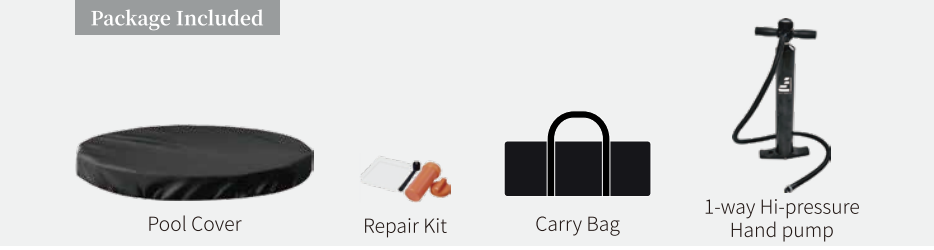
Use five statuses in the package master:
- Included: Required for the approved retail proposition and packed with the SKU.
- Optional upgrade: Offered as a controlled alternative or bundle with its own SKU and packaging impact.
- Sold separately: Available to the customer but not represented as part of the base package.
- Service stock: Held for warranty, replacement, or after-sales support rather than retail pack-out.
- Excluded: Deliberately not supplied, with the exclusion reflected in product information and instructions.
This classification prevents a product page, quotation, carton, manual, and warehouse record from describing different packages. If a component changes status, review the SKU identity, bill of materials, price, artwork, packed measurements, labels, instructions, and customer-support script together.
Treat the Pump and Adapter as One Interface

A pump is useful only when its hose, adapter, connection method, gauge where applicable, and instructions match the approved valve and product process. Record:
- Pump and hose item numbers
- Adapter identity and approved mating valve
- Included fittings and excluded alternatives
- Setup and disconnection instructions
- Electrical input, plug, and market requirements for any powered option
- Packaging position and protection
- Replacement references and approved substitutions
Do not label an item simply as a “standard pump.” Similar-looking adapters may not be interchangeable. If the package offers a manual base option and a powered upgrade, create separate controlled configurations. Product-specific instructions must govern inflation and pressure; the package decision should not invent a universal operating value.
Specify the Paddle as a Product, Not a Generic Add-On

The paddle affects package positioning, packed length, damage risk, assembly instructions, replacement inventory, and customer expectations. Define its construction and configuration at the level needed to control the SKU, including:
- Item and revision
- Number of sections and assembly method
- Adjustment and locking interface
- Blade and shaft references
- Packed position and protective method
- Instructions, inspection points, and replacement components
If a shorter, lighter, upgraded, or dual-purpose paddle is proposed, the buyer should approve the exact user and package role. Do not assume that one paddle fits every board, customer group, or intended activity. A paddle upgrade should create a visible buyer outcome, not merely a higher piece count or an unsupported performance claim.
Control the Fin and All Removable Hardware
Fins can create incomplete-package and compatibility claims because the fin, fin box, retaining part, and installation method must work together. The package record should show:
- Fin and fin-box interface
- Quantity and position
- Retaining clip, screw, plate, or other required hardware
- Installation and removal method
- Protective position inside the package
- Compatible replacement reference by board revision
Small retaining components should be visible in the pre-closure check. Do not approve a substitution from appearance alone. A compatible service fin should be identified against the exact board and interface, not marketed as universally interchangeable.
Separate Safety-Dependent Equipment From Marketing Assumptions
A leash or other personal equipment should not be included automatically because it appears in a familiar SUP bundle. The buyer must define the intended activity, product instructions, destination market, foreseeable conditions, warning responsibilities, and qualified review needed for the exact configuration.
For each safety-dependent item, record:
- Approved product and activity context
- Exact component and attachment interface
- Instructions and warnings
- Situations in which the item is not represented as appropriate
- Legal, safety, or destination-market approval owner
- Whether it is included, optional, sold separately, or excluded
Package configuration cannot establish that one leash type, flotation product, attachment method, or operating procedure is suitable for every location. The customer-facing description must match the approved evidence and instructions rather than turn package inclusion into a general safety claim.
Include Bags, Repair Items, and Documents Deliberately
A carry or storage bag should be evaluated through the complete packed workflow. Confirm that the approved board, accessories, and documents fit using a repeatable folding and packing sequence. Review handle, strap, closure, compartment, and identification needs without assuming that a bag is suitable for every transport or storage method.
Repair materials require equally clear boundaries. State what is supplied, what maintenance the customer is permitted to perform, what instructions apply, and which work requires authorized support. Do not describe a small repair pack as a complete solution for every type of damage.
Documents may include setup, inflation, inspection, care, storage, repair limits, warnings, component identification, and support information. Their language and revision must match the exact package. If the instructions show a pump, fin, leash, seat, or repair item that is not included, the package is already creating a claim risk.
Add Conversion Accessories Only When the SKU Supports Them
Seats, extra attachment components, alternative paddle blades, or other conversion items can create a distinct bundle, but they also change product claims, interfaces, instructions, packed size, and support needs.
Before including a conversion item, confirm:
- The approved board revision and attachment points
- The intended customer and use proposition
- All mating components and quantities
- Assembly, removal, and storage instructions
- Package identity and customer-facing description
- Evidence required for any new performance or application claim
If the conversion does not create a clear channel outcome, sell it separately or defer it. An accessory should not be added solely to make the package appear more valuable.
Adjust the Package by Channel
Physical Retail
The carton and display must communicate included and excluded contents without opening the package. Retail teams need scannable SKU identity, clear component imagery, controlled claims, and a practical method for handling opened-box or returned inventory.
E-Commerce
The product page, fulfillment record, carton label, and delivered contents must agree. Parcel handling makes internal protection, packed measurements, accessory separation, and return inspection part of the package decision. A small accessory lost inside a folded board or bag can be reported as missing even when it entered the carton.
Wholesale and Distributor Programs
Wholesalers may need a stable base package plus separately orderable upgrades and service parts. Version control is essential because downstream sellers may continue using older descriptions or images after a component changes.
ALS’s broader inflatable product catalog identifies pumps, paddles, and backpacks among its accessory offering. Final compatibility, quantities, and pack-out still need to be confirmed for the approved SUP SKU and sales channel.
Use a Retail Package Approval Matrix
Give every proposed component one row and record:
- Component name, item number, and revision
- Commercial status: included, optional, separate, service, or excluded
- Customer and channel role
- Compatible board, valve, fin box, attachment point, or mating part
- Quantity and approved alternative
- Instructions, warnings, and claims affected
- Packed position and protection
- Replacement owner and service reference
- Required sample, compatibility, packaging, or compliance evidence
- Approval status and open issue
Review the matrix vertically to confirm that the package supports its retail promise. Then review it horizontally to find components that create additional SKUs, carton changes, instructions, replacement stock, and claim exposure without adding a distinct customer outcome.
Finish with one decision for each package: approve the base kit, approve a separate upgraded bundle, hold for missing compatibility or market information, or remove unnecessary components.
For a complete sourcing workflow, use the inflatable SUP technical specification guide to control the board itself, then apply the inflatable product packing checklist to verify the approved package before shipment.
Request a SUP Package-Configuration Review
Before confirming a retail quotation or package artwork, assemble the customer promise, accessory-status matrix, compatibility references, instructions, packaging sequence, measured sample data, service parts, and approval responsibilities into one controlled package brief.
ALS can review that brief against the proposed SUP platform and accessory options, identify undefined interfaces or inconsistent pack-out claims, and show which components, samples, or packaging checks should be confirmed before the retail package enters production.
Frequently Asked Questions
What belongs in a standard inflatable SUP accessories package?
There is no universal standard. The approved package should match the board, sales channel and customer promise, with every paddle, pump, fin, leash, bag, repair item and document assigned a clear commercial status.
Should every SUP package include an electric pump?
Not automatically. An electric pump changes cost, documentation, plug or voltage requirements, parcel configuration and after-sales responsibilities. Treat it as a separate controlled option unless the SKU specifically requires it.
How should buyers approve accessory compatibility?
Approve the complete interface: board revision, valve, pump hose and adapter, fin box and fin, paddle sections, bag dimensions, instructions and replacement references. Keep the approved sample and package master together.
Can one accessory bundle be used across every SUP model?
Only when compatibility and the retail promise are genuinely identical. Shared-looking accessories can still differ by valve, fin box, size, load, labeling, document or packaging requirement.
