 跳到内容
跳到内容 
This inflatable kayak buying guide starts with a practical definition: an inflatable kayak is a portable watercraft built with airtight fabric chambers rather than a rigid shell. For retailers, distributors, rental operators, and private-label brands, however, the more useful question is not simply “what is an inflatable kayak?” It is: which construction, specification, and product position will work for the intended customer and sales channel?
This inflatable kayak buying guide explains the decisions a B2B buyer should make before requesting quotations. It covers product type, construction, dimensions, accessories, testing, compliance, packaging, and supplier evidence-without turning the first conversation into a price-only comparison.
Inflatable Kayak Buying Guide: Quick Decision Table
| Buying decision | Typical options | What the buyer should confirm |
|---|---|---|
| Target use | Recreation, touring, fishing, rental, sheltered coast | Water conditions, user skill, trip length, expected frequency |
| Construction | Inflatable floor, drop-stitch floor, full drop-stitch | Required rigidity, weight, performance, retail price position |
| Capacity | Solo, tandem, family/multi-person | Usable payload, seat layout, internal space-not only maximum load |
| Materials and seams | Reinforced PVC or another specified coated fabric; welded or bonded seams | Written material specification, seam method, reinforcement map |
| Accessory kit | Seat, paddle, pump, fin, bag, repair kit | Compatibility, replacement availability, packaging and target cost |
| Validation | Sample review, pressure retention, workmanship and on-water checks | Test method, acceptance criteria, records and approved reference sample |
1. Start With the Market, Not the Factory Catalog
A useful specification begins with the customer and operating environment. “Two-person inflatable kayak” is not enough information for a manufacturer to recommend the right platform. A recreational product for calm lakes has different priorities from a rental fleet used every day or a touring model expected to track efficiently over distance.
- Sales channel: e-commerce, specialty retail, distributor, resort, or rental fleet
- Primary user: beginner, occasional paddler, angler, touring customer, or commercial operator
- Water conditions: calm lake, slow river, sheltered coast, or another clearly defined environment
- Price position: entry, mid-market, or performance range
- Expected service level: occasional consumer use or repeated commercial deployment
These answers determine whether the product should prioritize low packed weight, stability, rigidity, tracking, drying speed, abrasion resistance, or ease of repair. Buyers building several models should review the inflatable kayak product range guide before finalizing individual specifications.
2. Choose the Right Construction Platform
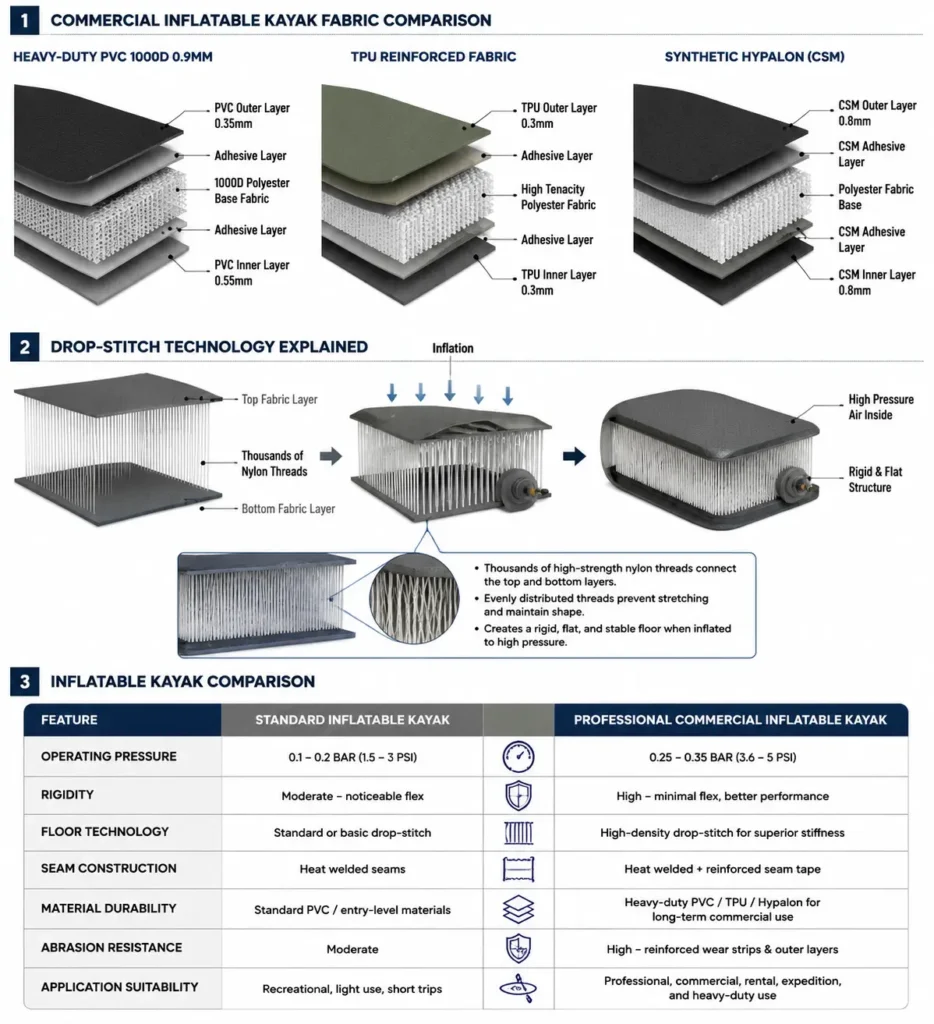
Construction is the most important product-positioning decision because it affects rigidity, paddling feel, packed weight, production cost, and the customer’s willingness to pay.
Traditional inflatable chamber construction
Large side chambers provide buoyancy and stability, while the floor may use a conventional inflatable structure. This format can suit recreational buyers who value portability, comfort, and an accessible retail price. Performance depends heavily on hull proportions, floor support, pressure, and fin design.
Drop-stitch floor construction
A drop-stitch floor uses internal threads to hold two fabric surfaces at a controlled distance when inflated. The higher-pressure floor improves standing firmness, load support, and overall rigidity while retaining the stability and comfort of inflatable side tubes. It is often a practical mid-market platform.
Full drop-stitch construction
Full drop-stitch sidewalls and floor can create a slimmer, more rigid profile with a paddling feel closer to a hard-shell design. The trade-offs may include higher material and production cost, a firmer cockpit, and different stability characteristics. Compare the commercial implications in our PVC vs. drop-stitch inflatable kayak guide.
3. Translate Customer Use Into Measurable Specifications
Do not approve a model from appearance alone. Put the variables that influence user experience and repeatability into a written specification sheet.
- Overall length and width
- Internal cockpit length and usable width
- Number and location of independent air chambers
- Rated working pressure for each chamber
- Product weight and packed dimensions
- Maximum stated capacity and intended working payload
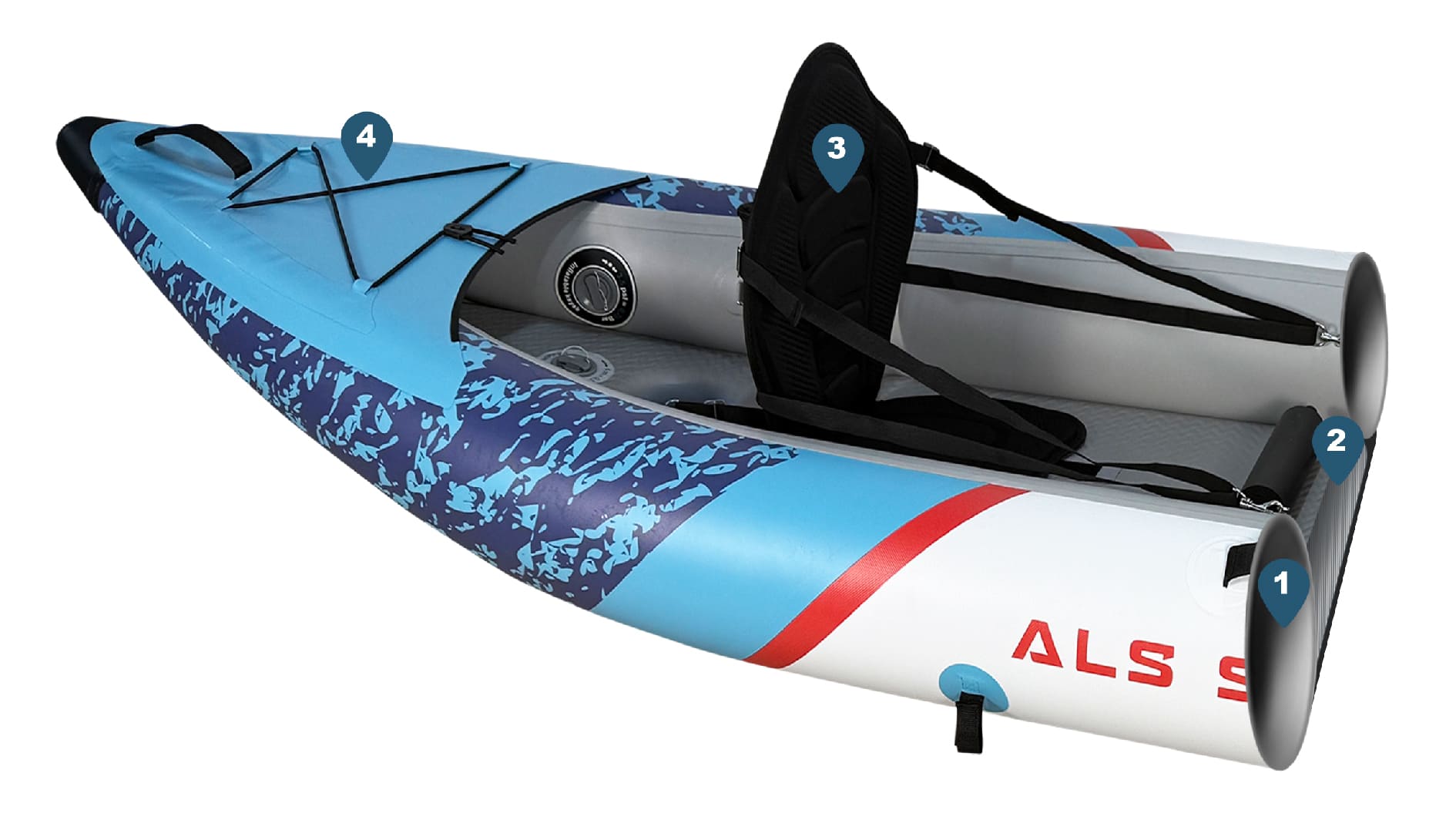
- Seat positions, footrest range, handles, D-rings, and attachment points
- Fin or skeg configuration
- Drainage or self-bailing arrangement where relevant
- Valve model and spare-part compatibility
Capacity requires particular care. A maximum load claim does not tell a buyer whether two adults, their gear, and the seat system will fit comfortably while maintaining suitable freeboard and handling. Sample evaluation should therefore use the intended passenger arrangement and representative payload.
4. Specify Materials, Seams, and Reinforcement
Terms such as “heavy-duty PVC” or “premium drop-stitch” are not complete specifications. Ask the supplier to identify the coated fabric system, thickness or weight, reinforcement layers, approved color, and the construction used in each chamber. The specification should also show reinforcement at handles, valves, D-rings, fin boxes, seat anchors, and other load-bearing points.
Seam construction must match the selected material and product design. Rather than assuming that one joining method is always superior, request the actual process used for structural seams, secondary fittings, and repairable components. Confirm how the factory controls temperature, pressure, dwell time, adhesive preparation where applicable, operator qualification, and in-process inspection.
The approved sample and bill of materials should become the production reference. A visual sample without controlled material and process records leaves room for unapproved substitutions during bulk production.
5. Evaluate Hull Geometry and On-Water Behavior
Length, waterline, width, rocker, bow profile, floor geometry, and fin position work as a system. A wide kayak may feel reassuringly stable but require more effort to paddle. A narrower, more rigid hull may track and accelerate better but suit a different user segment. Marketing claims should follow actual sample behavior rather than lead the design decision.
During sample trials, record:
- Initial stability and stability when boarding
- Tracking in light crosswind and during normal strokes
- Turning response with the selected fin
- Floor flex and hull deformation under intended load
- Seat and footrest ergonomics for the target user range
- Water entry, drainage, and drying after use
- Setup and packing time using the supplied pump and bag
6. Define the Accessory Kit as Part of the Product
The accessory kit affects customer reviews, warranty cost, carton size, and landed price. It should be specified and approved with the kayak-not added at the end of the order.
- Seat: support, adjustment range, anchor compatibility, and drying
- Paddle: assembled length, shaft material, blade shape, joint security, and spare availability
- Pump: pressure range, gauge accuracy, hose and valve compatibility
- Fin: size, box type, retention method, and replacement supply
- Carry bag: packed fit, handles, abrasion resistance, labeling, and user instructions
- Repair kit: material compatibility, regional transport restrictions for adhesives, and clear instructions
For private-label programs, also define artwork files, warning labels, serial or batch identification, manual languages, barcode placement, individual carton, and master-carton requirements.
7. Build a Sample Approval and Quality Plan
A sample is useful only when approval criteria are written. Keep a signed specification, approved color and artwork files, a component list, measurement tolerances, and dated photos. The plan should define how incoming materials, seam work, assembly, inflation, appearance, function, packing, and final release are checked.
Pressure-retention testing should state the conditioning period, starting pressure, test duration, temperature conditions, measurement method, and allowable change. Avoid copying a generic test time or pressure into every model; the procedure must match the product design and validated working pressure. See the detailed inflatable kayak quality-control checklist for production-stage controls.
8. Confirm Compliance for the Destination Market
Applicable requirements depend on product design, intended use, destination, claims, accessories, and sales channel. Ask for reports that identify the tested model, revision, laboratory, standard, result, and date. A certificate for a different product family is not evidence for the model being purchased.
Before the order, confirm requirements with a qualified compliance professional or local authority. This may include watercraft design and labeling rules, restricted-substance requirements, packaging obligations, manuals, importer information, and market-specific warnings. Customs classification and duties should likewise be verified with the buyer’s customs broker rather than inferred from a generic online HS code.
9. Compare Total Program Cost, Not Unit Price Alone
A quotation becomes comparable only after every supplier is quoting the same specification and commercial scope. Review:
- MOQ by model, color, and artwork
- Sample, tooling, printing, and packaging setup charges
- Included accessories and spare parts
- Individual and master-carton dimensions and weights
- Production lead time and material reservation assumptions
- Inspection, testing, and documentation included
- Warranty handling and documented defect-credit process
- Incoterm, payment milestones, and shipment handoff
Carton volume can materially change landed cost for an inflatable product. Request final packed dimensions from the approved sample and calculate container utilization before approving a price. The lowest ex-factory quotation can become the more expensive program if packaging is inefficient or accessories fail in the field.
B2B Inflatable Kayak RFQ Checklist
- Target market, sales channel, user, and water conditions
- Construction platform and approved material specification
- Dimensions, chamber layout, working pressure, payload, and product weight
- Hull geometry, fin, drainage, seat, and attachment layout
- Complete accessory and spare-part list
- Branding, labels, manual, barcode, and packaging requirements
- Sample tests and measurable acceptance criteria
- Destination-market compliance documents required
- MOQ, lead time, Incoterm, payment, inspection, and warranty terms
Send the same checklist to every shortlisted supplier. Our inflatable kayak RFQ guide shows how to turn these requirements into a quotation package.
Frequently Asked Questions
What is the best inflatable kayak construction for a private-label range?
There is no single best construction. A recreational model may prioritize stability, portability, and price; a performance model may justify a drop-stitch floor or full drop-stitch hull. Select the platform by customer, use environment, target price, and validated sample performance.
Should a B2B buyer choose a solo or tandem kayak first?
Use channel data and customer needs. Solo models can appeal to individual paddlers and reduce packed size, while tandems can serve couples, families, and rental operators. Evaluate both usable cockpit space and real working payload rather than relying on the passenger label.
What should be approved before mass production?
Approve the physical sample, written specification, bill of materials, artwork, labels, accessory kit, packing method, test plan, tolerances, and defect criteria. Record all approved changes and make the same documents available to production and inspection teams.
Next Step: Turn the Buying Guide Into a Product Brief
A strong inflatable kayak program begins with a defined market and measurable product brief-not a catalog model and a target price alone. Once the construction, dimensions, accessories, validation plan, and commercial terms are clear, compare suppliers against the same requirements.
Explore ALS Leisure’s inflatable kayak manufacturing and OEM options. If you already have a brief, submit the intended market, construction, quantity, branding, packaging, and target launch date through our contact page for a feasibility review. Before approval, use the separate inflatable kayak supplier vetting guide to verify the factory and evidence behind the quotation.
